
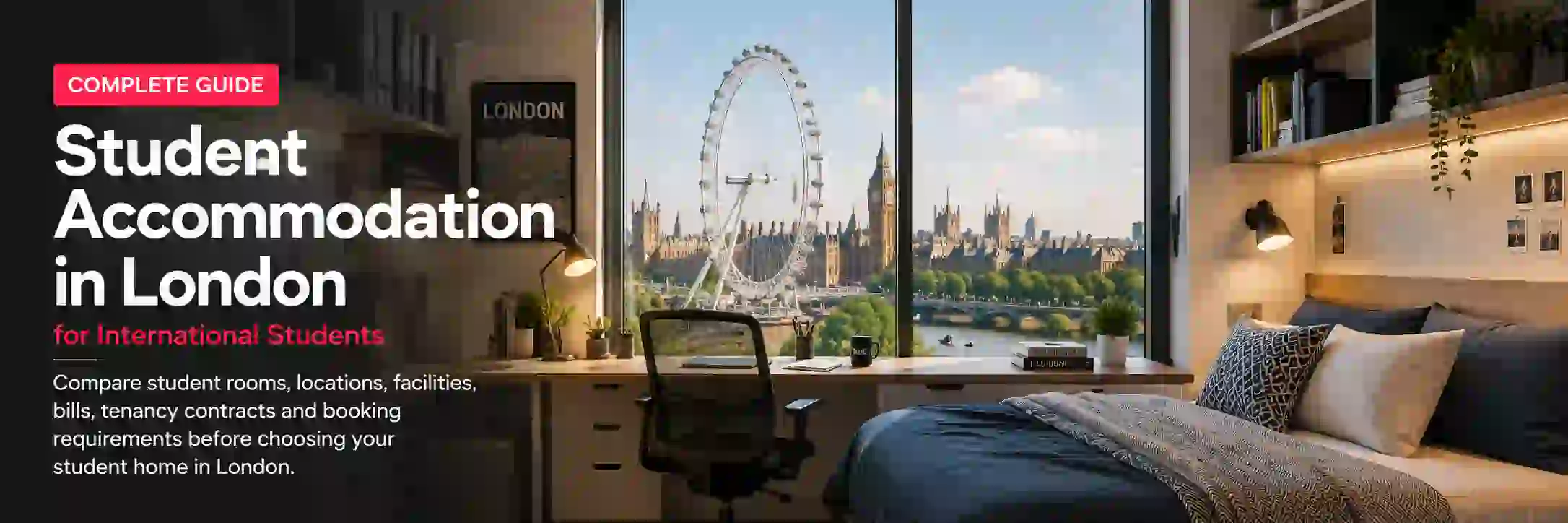
Student accommodation in London: quick answer
Quick answer: Students should compare the total contract cost, room type, included bills, university commute, tenancy length, cancellation policy and payment requirements before booking accommodation in London. Purpose-built student accommodation is often convenient for international students because rooms are normally furnished and buildings may include utilities, internet, security and student-focused facilities.
Types of student accommodation in London
London offers several accommodation options for undergraduate, postgraduate and international students. Each option provides a different balance of privacy, price, independence and student support.
Purpose-built student accommodation
Purpose-built student accommodation, commonly called PBSA, is designed specifically for students. Properties may include furnished rooms, study areas, communal lounges, laundry facilities, secure access and on-site support.
University halls
University-managed accommodation can provide easy access to university services and a strong student community. Availability and room choices may be limited depending on the university and application period.
Private rented accommodation
Private rentals include shared houses, private rooms and apartments rented through landlords or letting agents. Students may need to arrange utilities, internet, furniture, deposits and guarantor documentation separately.
Homestays
Homestays allow students to live with a local host. This option may suit students who prefer a family environment while adjusting to life in a new country.
Student room types explained
The room type determines how much personal space a student receives and which facilities are shared with other residents.
Ensuite room
An ensuite room normally includes a private bedroom and private bathroom, while the kitchen and living area are shared with other students.
Studio
A studio normally includes a private bedroom area, bathroom and kitchen. It provides greater independence but may cost more than an ensuite or non-ensuite room.
Non-ensuite room
A non-ensuite room provides a private bedroom while the bathroom and kitchen are shared. It can be suitable for students looking for a lower-cost private bedroom.
Shared room
A shared room is occupied by more than one student. It can reduce accommodation costs but provides less privacy.
How to choose the right London location
Students should compare accommodation using the complete door-to-door university commute rather than distance alone. A property that appears farther away may still provide a faster journey when it has direct underground, rail or bus connections.
Before booking, students should check:
- Travel time to the correct university campus
- Number of transport changes
- Distance to the nearest station or bus stop
- Availability of late-evening transport
- Nearby grocery shops, pharmacies and healthcare services
- Neighbourhood activity and security
- Total weekly transport cost
Students can compare student accommodation in London using room type, weekly rent, facilities and university location.
Calculate the total accommodation cost
The advertised weekly rent does not always represent the complete amount a student will pay. Students should calculate the full contract value and confirm which additional charges apply.
Total accommodation cost = weekly rent × tenancy weeks + deposits + additional charges
Check whether the rent includes:
- Electricity
- Water
- Heating
- Internet
- Contents insurance
- Gym or communal facilities
- Cleaning of shared areas
Contracts, deposits and payment requirements
Students should read the tenancy agreement before paying a deposit or signing a contract. Important details include the tenancy dates, payment schedule, guarantor requirements, cancellation conditions and deposit refund process.
International students should confirm whether they need:
- A UK-based guarantor
- Advance rent payment
- A holding deposit
- A security deposit
- Identity and university documents
- Visa or right-to-rent documentation
Important: Never send accommodation payments to an unverified personal account. Confirm the provider, property, room type and official payment method before transferring money.
Student accommodation booking checklist
- Confirm your university and campus location.
- Set a weekly and total contract budget.
- Select acceptable room types.
- Compare the university commute.
- Check which bills are included.
- Review the tenancy start and end dates.
- Check deposits and guarantor requirements.
- Read the cancellation and refund policy.
- Verify the property and accommodation provider.
- Keep copies of contracts, emails and payment receipts.
Common student accommodation booking mistakes
- Choosing a room based only on weekly rent
- Not calculating the total tenancy value
- Checking the wrong university campus
- Assuming all utility bills are included
- Ignoring cancellation conditions
- Booking before verifying the provider
- Not checking guarantor requirements
- Waiting too long for a specific room type
BookMyAcco expert recommendation
The right student accommodation should balance affordability, safety, university commute, room quality and clear tenancy conditions. Students should compare several suitable options and review the complete contract before making a payment.
Students who need more privacy may prefer a studio, while those who want a social environment and lower total cost may prefer an ensuite or non-ensuite room.