

9 of 49 properties found
Student Accommodation in Leicester, United Kingdom
9 of 49 properties found


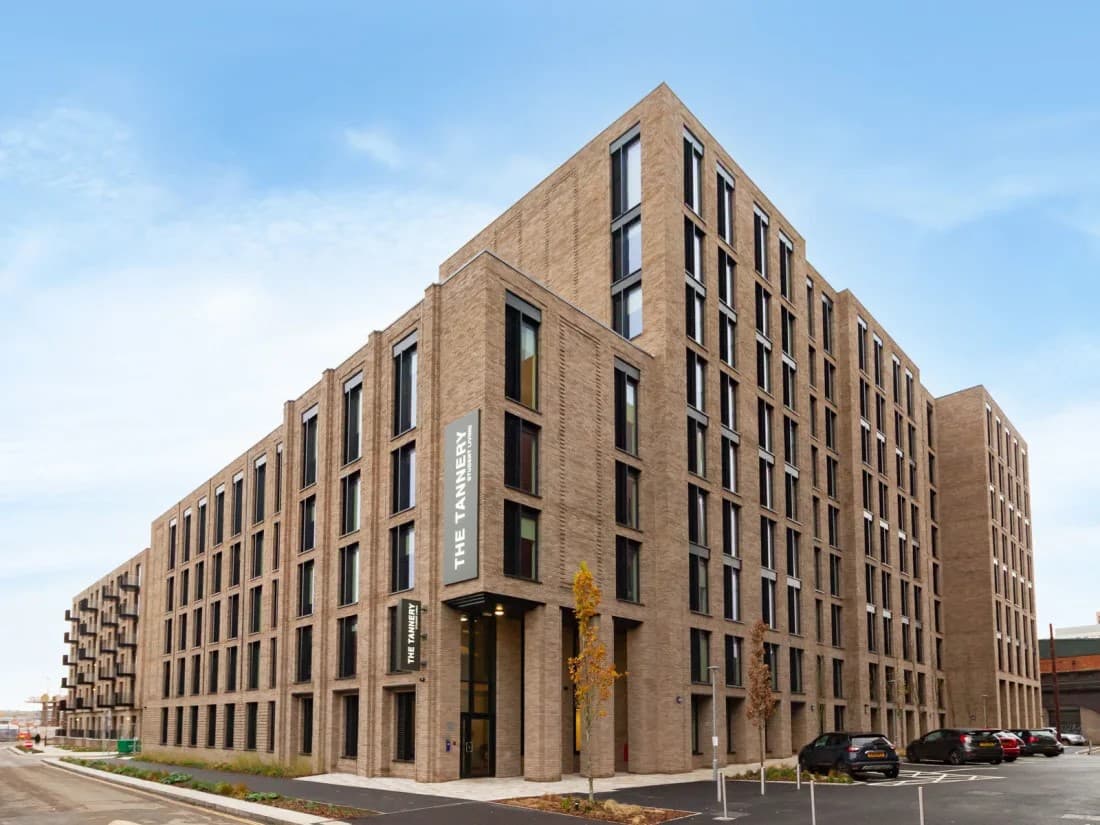
Student Accommodation in Leicester
Leicester is a compact university city in England’s East Midlands, and many student-accommodation searches focus on the corridor between De Montfort University, the city centre, Leicester railway station and the University of Leicester. The two main universities are relatively close to central Leicester, but they occupy different sides of the centre. De Montfort University is based around The Gateway beside the River Soar, while the University of Leicester’s central campus is around University Road, south-east of the railway station. University of Leicester students may also use Brookfield and accommodation at The Village in Oadby, so the exact teaching and residence location still matters.
Students can compare university halls, private purpose-built student accommodation, en-suite and non-en-suite rooms, studios, shared flats, shared houses and private apartments. The most suitable option depends on privacy, shared facilities, campus journey, tenancy arrangement and total cost. A useful budget should include the full rent across the planned stay, deposit or holding payment, included and excluded bills, laundry, transport, food and move-in purchases rather than only the advertised weekly figure.
BookMyAcco allows students to search listed accommodation in Leicester, review room and property information, compare available options and submit an enquiry. Before booking, confirm the university campus, move-in date, expected stay, room facilities, payment schedule, guarantor conditions and cancellation policy. Leicester’s central geography can make walking practical from several neighbourhoods, but students should test the exact door-to-door route and avoid assuming that every city-centre property is equally convenient for both universities.
Leicester’s accommodation market is shaped mainly by the University of Leicester and De Montfort University. De Montfort University operates from a compact city-centre campus around The Gateway, Newarke Street and the River Soar. The University of Leicester’s main academic campus is centred on University Road, south of the city centre, with additional sites such as Brookfield and university accommodation in both The City and The Village. This geography gives many students a broad search area, but it also makes the exact course location important. A property near De Montfort University may require a longer walk to a University of Leicester faculty, while a room towards Clarendon Park may be less convenient for daily teaching at DMU.
University-managed halls are one route into the city. The University of Leicester divides much of its accommodation between The City, close to the main campus, and The Village in the Oadby area. The City includes purpose-built residences near campus and the railway station, while The Village has a more residential setting and is linked to campus by the university shuttle during term time. De Montfort University students can also access university-associated and private accommodation around the campus and centre. Students should distinguish a university-managed residence, a nominated private hall and a fully independent private building because the application, contract and support arrangements can differ.
Private purpose-built student accommodation is concentrated around the city centre, Newarke Street, Bath Lane, Upperton Road, Eastern Boulevard, Regent Road and the corridor between the two universities. These buildings commonly offer en-suite rooms in shared flats and self-contained studios. Some include study rooms, lounges, gyms, reception, laundry or cycle storage, but facilities vary. A building should be judged on the current room information and agreement rather than a general expectation that every private hall has the same amenities or support.
Shared houses and private flats are common in Clarendon Park, Highfields, Westcotes, the Narborough Road area, Evington, Stoneygate, Knighton and Aylestone. These options can provide more living space and independence, particularly for groups who already know one another. The trade-off is greater responsibility for utilities, cleaning, household organisation and the legal commitment. Students should check whether they have individual agreements or one joint tenancy, how bills are divided and what happens if a housemate leaves.
Leicester’s compact centre can reduce the need for daily public transport. Students living near New Walk, the railway station, Highfields or the city-centre edge may be able to walk to the University of Leicester. DMU students often compare the centre, Westcotes, Braunstone Gate, Newarke Street and areas west or south of campus. University of Leicester students living in Oadby need to consider the shuttle or local buses, while students in outer residential districts should calculate the full journey rather than relying on postcode distance.
Privacy, social environment and cost should be compared together. A studio provides greater independence but can involve a higher rent and fewer natural opportunities to meet flatmates. An en-suite room retains a shared kitchen while giving the resident a private bathroom. A non-en-suite room or bedroom in a shared house may reduce the rent but increases the importance of bathroom ratios, cleaning routines and housemate compatibility. Students should also compare furnishing, kitchen storage, heating, ventilation and usable study space.
International students may need to reserve a room before arriving in Leicester. They should confirm the university and campus on the offer or CAS, request a live virtual viewing where possible, verify payment details and ask which identity, immigration, student-status and guarantor documents are required. Domestic students should also verify the agreement and avoid assuming that a familiar neighbourhood or lower price makes a property suitable. Requirements for documents, payments, guarantors and cancellation vary by property.
Booking earlier for the main September intake normally gives students more time to compare room types and areas, but a rushed choice can create an unsuitable commute or payment commitment. Students applying later through Clearing, changing course or waiting for visa confirmation may need to widen the search. BookMyAcco can help students compare listed options, but the final decision should rely on the current property-specific terms, campus route and total planned cost.
University halls are accommodation offered through a university’s residence system. At the University of Leicester, students can compare The City accommodation close to the main campus and The Village accommodation in Oadby. Residences can include shared-bathroom rooms, en-suite rooms, studios and other layouts, subject to the current application cycle. University halls often provide a structured arrival process and residence support, but students should still check the occupancy dates, meal arrangement, room facilities, payment schedule and conditions for ending the contract.
Private purpose-built student accommodation, commonly called PBSA, is designed for students and can include cluster flats, studios and one-bedroom apartments. Leicester has many private buildings around the two university campuses and central districts. A cluster flat normally groups private bedrooms around a shared kitchen and living space. Ask how many students share the kitchen, what appliances and storage are provided, whether cleaning is included and whether communal spaces are open throughout the year.
An en-suite room normally includes a private bedroom and bathroom with a shared kitchen. This arrangement suits students who want bathroom privacy while retaining a social flat environment. Compare the room dimensions, bed size, desk, wardrobe, window, floor level and distance from the kitchen or lift. Confirm whether utilities and internet are included, whether usage limits apply and whether laundry is charged separately. En-suite does not mean the student receives a private kitchen.
A non-en-suite room normally provides a private bedroom with shared bathroom and kitchen facilities. It may be available in university residences, private halls or shared houses. Students should ask how many residents share each bathroom, whether showers and toilets are separate, who cleans communal areas and how repairs are reported. In older houses, heating, insulation and ventilation can have a significant effect on comfort and bills.
A studio combines sleeping, study, cooking and bathroom facilities in a self-contained unit. It can be useful for postgraduates, mature students or anyone who prefers an independent routine. Studios may cost more than rooms with shared facilities, and the quality of the layout matters. Check whether the kitchen has an oven or only limited appliances, whether there is enough food preparation space, how ventilation works and whether the desk can be used comfortably. Dual occupancy must be expressly permitted.
Shared student houses are common in Clarendon Park, Highfields, Westcotes, Evington and the Narborough Road corridor. They can offer a lounge, larger kitchen and a more domestic experience. Before signing, confirm whether the tenancy is individual or joint, who pays utilities, how the deposit is managed, whether an HMO licence is required and held, and what obligations apply if one tenant wants to leave. Housemates should discuss cleaning, noise, overnight guests, food storage and study routines before committing.
Twin rooms are intended for two occupants sharing one bedroom and should not be confused with a two-bedroom flat. The price may be stated per person. Confirm both applicants’ responsibilities, storage, study space and what happens if one person cancels. One-bedroom apartments provide a separate bedroom and living space and may suit a couple or a student wanting more separation between study and sleep, subject to occupancy rules.
Furnished private accommodation can still differ greatly. Verify the bed, mattress, desk, chair, wardrobe, curtains, kitchen appliances and communal furniture against a written inventory. Marketing images may show a demonstration room rather than the allocated space. Students with accessibility requirements should confirm step-free access, lift routes, adapted bathrooms, doorway widths, room-floor location, emergency procedures and the route to the exact university building before paying.
Leicester City Centre is a practical starting point for students who want access to shops, services, the railway station and both central universities. Private student buildings are concentrated around Newarke Street, Bath Lane, Regent Road, Eastern Boulevard and other inner-city streets. DMU can be walkable from the western and southern centre, while the University of Leicester is reached more easily from the railway-station and New Walk side. Central living can reduce transport dependence but may involve traffic, nightlife noise or a higher rent, so check the exact building and window position.
Clarendon Park lies south of the University of Leicester and is one of the city’s established student residential areas. Queens Road provides cafés, shops and everyday services, while traditional terraced houses and flats form much of the rental market. The area can be convenient for University of Leicester students and may suit groups seeking a shared house. Students should compare heating efficiency, bathroom numbers, street parking, HMO licensing and the walking route to their faculty.
Highfields is east of the city centre and close to Leicester railway station, London Road and the University of Leicester side of the city. It offers a mixture of houses, flats and purpose-built accommodation. The location can work for students at either main university depending on the address. Highfields varies street by street, so review the exact route, local services, property management, lighting and access rather than relying on the area name alone.
Westcotes and the Narborough Road corridor lie west and south-west of the centre. They contain a substantial private-rental market, local shops and bus routes, and can be convenient for De Montfort University. Shared houses and flats are common. The distance to the University of Leicester varies, and students should test the crossing of major roads and the route at lecture times. Compare the rent saving with any added walk or bus cost.
Braunstone Gate and the western edge of the city centre are close to DMU and the River Soar. The area provides restaurants, shops and access to private housing and student buildings. It can be lively, which may suit students who want a social location but not those who prefer a quiet evening environment. Check sound insulation, late-night activity, building access and the walking route from campus.
Evington lies east and south-east of the centre and includes residential streets, local shopping and bus connections. Parts of Evington can be relevant to the University of Leicester, especially for students who prefer a quieter neighbourhood or larger house. The exact journey varies considerably, so students should check the bus stop, service frequency and walking distance rather than treating the whole district as campus-adjacent.
Stoneygate and Knighton are residential areas south-east of the centre. They may appeal to postgraduates, mature students or households seeking a quieter setting. Housing can include flats, converted properties and shared houses. These areas can provide access towards the University of Leicester, but rent, property size and transport differ by street. Students should review heating, furnishing, local grocery access and evening travel.
Oadby is important because the University of Leicester’s Village accommodation is located in this wider area. The Village provides a distinct residential student environment and is linked to the main campus by the university shuttle during term time. Private accommodation in Oadby should be compared separately from university halls because access to the shuttle and support arrangements may differ. Check the exact stop, timetable, weekend service and alternative route.
Aylestone lies south-west of central Leicester and can offer private houses and a more residential atmosphere. It may suit DMU students or groups who find an appropriate bus or cycle route, but it is not uniformly close to either university. Include travel costs and late services in the comparison. Students using placements in other parts of the city may find the road connections useful, subject to the actual destination.
New Walk and the railway-station corridor connect the city centre with the University of Leicester side of Leicester. Accommodation here can provide a convenient walk to the main campus, station and centre. Property styles include studios, flats and converted buildings. Check whether the room faces a busy road, whether there is secure cycle storage and how the route works after dark.
No neighbourhood is automatically the cheapest, safest or most suitable. Two properties in the same area can differ in condition, noise, access, management and total cost. Students should enter the exact address and faculty building into a journey planner, view the street and property, and confirm the room and agreement before paying.
The University of Leicester’s main campus is centred on University Road, Leicester LE1 7RH. Academic buildings extend across the central campus, so students should identify the department, laboratory, medical building or library used most frequently. The City accommodation, New Walk, Clarendon Park, Highfields, Stoneygate, Knighton and parts of the city centre can all be relevant depending on the route.
The University of Leicester also has Brookfield, associated with the School of Business, and The Village accommodation in the Oadby area. A student living in The Village uses a different daily travel pattern from someone in Freemen’s Common or Nixon Court near the central campus. The university operates a term-time shuttle between The Village, Brookfield and the main campus. Students should verify whether their accommodation and timetable are covered by the service and check alternatives outside operating hours.
De Montfort University is a campus-based university in the city centre, with its main address at The Gateway, Leicester LE1 9BH. The campus includes buildings around Newarke Street, Oxford Street, Mill Lane and the River Soar. City-centre accommodation, Westcotes, Braunstone Gate, Narborough Road, Highfields and some properties between the universities may be practical. Use the actual teaching building when comparing distance.
Students should not assume that accommodation described as near “Leicester University” serves both institutions equally. The University of Leicester and De Montfort University are separate universities with different campuses. A property can be close to one and still require a substantial walk to the other. International students should check the institution name and campus on the offer or CAS before paying.
Health, education and other placement-based courses may require travel beyond the main campus. A student may need to reach Leicester Royal Infirmary, schools, clinics, businesses or other sites. In that situation, access to the railway station, bus corridors or major roads can matter as much as campus distance. Ask the department for likely placement patterns where possible.
University halls, partner halls and independent private residences use different application and contract processes. Confirm who owns or manages the building, who receives payment, where maintenance requests go and whether the university is a party to the agreement. The use of a university name in location marketing does not make a property university-managed.
BookMyAcco can help students review listed accommodation, but the final location check should include the exact campus, faculty, expected timetable and placement. Test morning and evening travel, accessibility, road crossings and transport cost. A short straight-line distance can hide an inconvenient route.
Leicester students commonly use walking, local buses, cycling and rail. The compact central area makes walking practical between many city-centre properties, De Montfort University, Leicester railway station and the University of Leicester. The actual route still matters because major roads, the River Soar, the railway and the inner road network can affect pedestrian access.
Leicester railway station is on London Road, east of the city centre and relatively close to the University of Leicester side of the city. It provides regional and national connections and can be useful for students travelling home or reaching placements. DMU is farther west, so students should include the cross-centre walk or bus. Proximity to the station is useful but does not automatically mean proximity to every campus building.
Haymarket Bus Station and St Margaret’s Bus Station serve different local and regional routes. Leicester and Leicestershire bus services are operated by companies including Arriva, Centrebus, First, Kinchbus and Stagecoach, and multi-operator tickets may be available. Routes and fares can change, so students should use current operator and council information when evaluating an address.
The University of Leicester operates a term-time shuttle between The Village, Brookfield and the main campus. The service is particularly relevant to university residents in Oadby, but timetables vary and access conditions should be checked. A private address near The Village is not automatically entitled to the same travel arrangement. Students should identify the nearest stop and an alternative route.
Cycling can be practical between residential areas and the two main universities. Check secure cycle storage at the property and campus, traffic conditions, lighting, gradients and whether the route remains comfortable in winter. A map estimate can select a route that is unsuitable for an inexperienced cyclist. Students with accessibility needs should review dropped kerbs, bus access, station assistance and the complete route from stop to building.
Evening travel should be tested separately. A frequent daytime bus may run less often after late library sessions, work or social activities. Check the last service, waiting environment, number of changes and alternative taxi cost. Avoid broad safety claims; review the exact street, lighting, access controls and journey at the times it will be used.
International students may arrive through Birmingham, London or another airport and continue by rail or coach. Confirm the final route to Leicester, the distance from the arrival point to the property and the check-in hours. Key collection can be at a reception or office different from the residence itself, so obtain written arrival instructions.
The strongest transport comparison records the property entrance, walk to the stop or station, service, frequency, changes, final campus stop and onward walk. Repeat the journey for the morning, evening and weekend and add the cost to the accommodation budget.
Begin by confirming whether the course is at the University of Leicester, De Montfort University or another institution, then identify the exact campus and faculty. Check the course start, expected welcome activities, placement locations and preferred move-in date. Students at the University of Leicester should distinguish the central campus, Brookfield and The Village accommodation in Oadby.
Start comparing in sufficient time for the main September intake, but do not make a payment before the property, room and agreement are clear. Availability can change, and a listing may represent a room category rather than a particular room. Ask for the current room type, rent, total planned cost, occupancy dates and booking deadline in writing. Late applicants should widen the area search and calculate transport.
Identify the agreement type. Most private assured tenancies in England became assured periodic tenancies from 1 May 2026, while university halls and qualifying purpose-built student accommodation may use a common-law tenancy or licence with a fixed occupancy period. The agreement should explain rent, notice, eligibility, house rules and how the arrangement ends. In a shared house, check whether liability is individual or joint.
Separate every payment. Rent, holding deposit, tenancy deposit, first instalment and optional services have different purposes. For relevant tenancies, current English rules limit permitted fees and cap holding and tenancy deposits. University halls and licence arrangements can use different terminology. Confirm the legal payee, account details, currency, refund conditions and receipt process through an official channel.
Guarantor requirements vary. A provider may request a UK guarantor for instalments, accept an international or third-party guarantor, or use a different payment structure. Ask who qualifies, what evidence is needed and whether the guarantee covers only the student’s obligations or a joint household. A guarantor should read the agreement independently.
Prepare documents securely. Common requests may include photo identification, university offer or enrolment evidence, student number, proof of address, payment details and guarantor documents. International students may need immigration or right-to-rent evidence for applicable private rentals. Student halls can be excluded from some right-to-rent requirements, so the exact accommodation type matters. Ask which documents are required and use a secure upload process.
Cancellation terms must be reviewed before payment. Check any cooling-off period, cancellation deadline, evidence requirements, refund timing, replacement-tenant obligation and permitted charges. No Visa No Pay and No Place No Pay apply only where the property expressly offers the policy and the student meets the detailed conditions. Free cancellation should not be assumed.
Request an in-person or live virtual viewing. Confirm the room, floor, window, bed, bathroom, kitchen, heating, storage, internet, laundry, communal spaces and entrance. In a shared house, check HMO licensing where required, gas and electrical information, fire precautions, damp, locks and appliance condition. Obtain written confirmation of promised repairs.
Students with accessibility requirements should verify the complete route from the street to the room and from the property to campus. Check step-free access, lift operation, adapted bathroom details, kitchen use, alarm systems and evacuation arrangements. A building lift does not prove that the allocated room and all essential facilities are accessible.
Before move-in, confirm the check-in address, time, key collection, outstanding balance and documents. Review the inventory, photograph existing damage and report problems promptly. International arrivals should plan the journey from the airport or station and tell the provider about delays. BookMyAcco can help compare listed accommodation, but the signed property-specific agreement controls the booking.
Frequently Asked Questions
FAQs about student accommodation in Leicester.
Confirm whether you will study at the University of Leicester or De Montfort University, then search BookMyAcco using the exact campus, move-in date, room type and budget. Compare the property address with your faculty rather than using the city centre as the only reference. Review the current room information, total planned cost, included bills, payment schedule, guarantor and cancellation terms. University of Leicester students should also distinguish The City, The Village in Oadby and Brookfield-related travel before submitting an enquiry.
Students may compare university halls, private purpose-built accommodation, en-suite rooms, non-en-suite rooms, studios, shared flats, shared houses, twin rooms and private apartments, subject to availability. An en-suite normally has a private bathroom and shared kitchen, while a studio is self-contained. Shared houses provide more communal space but require careful checks on utilities, licensing, housemates and legal liability. The exact furnishing, facilities, occupancy rules and agreement type vary by property.
Students commonly compare the city centre, Clarendon Park, Highfields, Westcotes, Braunstone Gate, the Narborough Road corridor, Evington, Stoneygate, Knighton, Oadby and Aylestone. Clarendon Park is particularly relevant to the University of Leicester, while Westcotes and the western centre can suit DMU. Oadby is important for University of Leicester Village accommodation. Suitability depends on the exact street, campus route, property condition, transport and total cost.
The University of Leicester and De Montfort University are both near central Leicester, but they are separate campuses on different sides of the centre. DMU is around The Gateway and Newarke Street, while the University of Leicester main campus is around University Road. Some central properties can work for both, but the walking route varies. Students should enter the actual faculty building into a journey planner and not assume that accommodation described as near one university is equally convenient for the other.
International students can often begin an application remotely, subject to the property’s requirements. You may be asked for a passport, university offer or enrolment evidence, student number, immigration or right-to-rent information for applicable private renting, payment details and guarantor documents. Request a live virtual viewing and confirm the address, room category, payment recipient, cancellation policy and check-in process in writing. Check the university and campus shown on the offer or CAS before paying.
There is no single Leicester price because cost varies by room type, building, area, included bills and planned stay. Studios and one-bedroom apartments commonly cost more than rooms in shared flats or houses. A central room may reduce travel, while an outer residential property may have a lower rent but additional bus costs.
Bills are included only where the individual property confirms them. Some university halls and private student buildings include heating, electricity, water and internet, sometimes with fair-usage conditions. Shared houses may exclude some or all utilities. Laundry, television licensing, parking, bedding, contents insurance or optional facilities can remain separate. Request a written list of included services and compare usage limits, heating efficiency and any additional charges before booking.
Compare the total rent over the planned stay, holding or tenancy deposit, excluded utilities, internet, laundry, transport, food, household supplies and move-in purchases. Account for weeks charged when you may not use the room and for payments due before student finance. University of Leicester students in Oadby should include travel outside shuttle hours. A lower weekly rent may produce a higher total if the contract is longer or the journey is more expensive.
Begin comparing once the university, campus and likely start date are known, particularly for September. Earlier research provides more time to compare areas, room types and payment schedules, but students should not rush into an unverified payment. Confirm the room, total cost, occupancy dates and cancellation conditions in writing. Clearing and late international applicants may need to widen the search and calculate transport from residential areas outside the central campus corridor.
Selected halls, private student residences and other providers may offer semester, summer or short stays, but availability is property-specific. Ask for the exact start and end dates, total price, included bills, eligibility and cancellation terms. A short-stay weekly rate may differ from the academic-year rate. Verify that any sublet or replacement arrangement is authorised by the landlord or provider and obtain a written agreement before paying.
Student guides for Leicester
Articles about living and booking student accommodation in Leicester.